
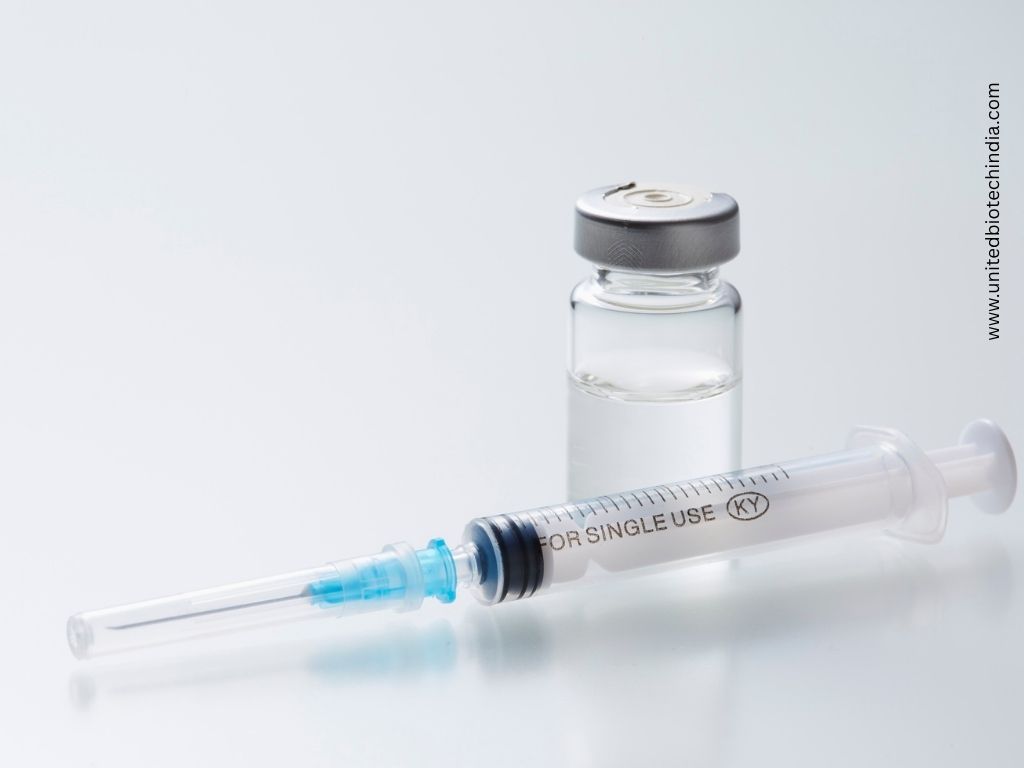
An injectable pharmaceutical product destined for a hospital in Nairobi travels a long way from the facility where it was made. It moves through export documentation, customs clearance, international freight, in-country distribution, and hospital pharmacy handling before it reaches the nurse who draws it up and the patient who receives it.
At every point in that journey, the product is what the manufacturer made it. The quality cannot be added in transit. The sterility cannot be verified at the port. The potency cannot be confirmed at the pharmacy counter. What leaves the manufacturing facility is what reaches the patient — which is precisely why injectables manufacturing capabilities designed for export compliance are not simply a commercial requirement. They are a patient safety architecture built into every stage of production.
For pharmaceutical manufacturers with genuine global ambitions — serving regulated markets across Africa, the Middle East, Southeast Asia, and beyond — export compliance is not a box to tick after the product is made. It is the design principle that shapes how the product is made from the very beginning.
What Export Compliance Actually Demands from an Injectables Manufacturer
Export compliance in injectables manufacturing is commonly misunderstood as a regulatory filing exercise — something managed by a documentation team after the manufacturing team has done its work. The reality is the opposite. Export compliance begins in facility design. It runs through every validated process. It is embedded in every quality system. And it culminates in the regulatory dossier that reflects — accurately and completely — everything the manufacturing operation actually does.
For injectable pharmaceutical manufacturers serving international markets, export compliance demands:
Facilities built to international GMP standards from the ground up — not retrofitted to meet inspection requirements, but designed from the first blueprint to satisfy the facility standards of WHO, US FDA, EMA, and the national regulatory authorities of major export markets simultaneously.
Validated manufacturing processes with full documentation trails — every critical process step characterised, validated, and documented in a way that can be presented to any regulatory authority in the world as evidence that the process consistently produces product of the required quality.
Analytical methods validated to international pharmacopoeial standards — testing procedures that not only meet the requirements of the Indian Pharmacopoeia but that satisfy the analytical standards of the United States Pharmacopeia, European Pharmacopoeia, and WHO specifications simultaneously, enabling a single analytical programme to support registrations across multiple international markets.
Stability data generated under internationally recognised conditions — ICH-aligned stability studies that demonstrate product quality across the shelf life and distribution conditions relevant to diverse export markets, including tropical climate zones where temperature and humidity stress on pharmaceutical products is significantly greater than in temperate markets.
Regulatory dossiers prepared to international Common Technical Document standards — submission packages that present manufacturing, quality, and clinical data in the format recognised by regulatory authorities across all major export markets, enabling efficient simultaneous registration across multiple jurisdictions.
United Biotech India’s manufacturing operations are built around each of these requirements — with WHO-cGMP certified facilities and integrated quality systems that make export compliance a manufacturing output, not an afterthought.
Facility Design — Where Export Compliance Begins
The physical facility in which injectable pharmaceuticals are manufactured is the first and most fundamental expression of export compliance capability. A facility designed to meet domestic manufacturing standards may produce products of adequate quality for local markets — but may fall short of the facility standards required for export to regulated international markets.
Export-compliant injectables facilities are designed with international inspection in mind from the outset:
Cleanroom classification and environmental monitoring aligned with the standards of major regulatory authorities — ISO classifications for critical manufacturing zones, continuous particle monitoring, scheduled environmental sampling programmes with defined alert and action limits, and trend analysis that identifies deteriorating environmental conditions before they affect product quality.
Unidirectional material and personnel flow that prevents cross-contamination between incoming materials, manufacturing operations, and finished product handling — with physical separation between clean and less-clean zones, airlocks and pressure differentials that prevent contaminated air from entering critical manufacturing areas.
Dedicated manufacturing suites for product categories with cross-contamination risk — including contained manufacturing areas for cytotoxic or highly potent compounds where shared equipment or airspace with standard injectables products is not acceptable.
Utility systems validated to pharmaceutical grade standards — water for injection systems, clean steam, compressed gases, and HVAC systems that consistently deliver utilities meeting the specifications their downstream pharmaceutical processes require.
Equipment qualification documentation that demonstrates every piece of manufacturing equipment performs within specification — installation qualification, operational qualification, and performance qualification records that provide international regulators with confidence in the mechanical reliability of the production operation.
Sterility Assurance — The Core Export Compliance Capability
For injectables manufacturers, sterility assurance is the capability that most fundamentally determines export market access. No regulatory authority in the world will approve an injectable product from a facility whose sterility assurance systems cannot be independently verified as robust.
Export-compliant sterility assurance requires a programme that goes significantly beyond basic sterility testing:
Aseptic process validation through media fill simulations that replicate the full complexity of commercial manufacturing conditions — worst-case fill durations, maximum interventions, full personnel complement — and demonstrate that the manufacturing system can consistently produce sterile product across the range of conditions encountered in routine production.
Environmental monitoring programme with defined sampling locations, frequencies, and alert/action limits aligned with international regulatory expectations — and with a demonstrated track record of environmental control that regulators can review during inspection.
Parametric release capability for terminally sterilised products where applicable — demonstrating the manufacturing and monitoring capability that supports release based on process data rather than retrospective sterility testing alone.
Container closure integrity programme that validates the seal integrity of filled and closed containers across the full range of conditions — temperature cycling, transport stress, storage duration — that export supply chains impose.
United Biotech India’s quality assurance framework maintains the sterility assurance programme that export-market regulators expect to find — documented, validated, and continuously monitored to the international standards that global injectable supply demands.
Analytical Capability — Supporting Multi-Market Registration
One of the most practically demanding aspects of injectables manufacturing for export compliance is the analytical requirement — the need to generate quality data that simultaneously satisfies the pharmacopoeial standards of multiple international markets.
Different regulatory jurisdictions reference different pharmacopoeias — and while harmonisation efforts have reduced the divergence between major international standards, meaningful differences remain in analytical method specifications, acceptance criteria, and testing requirements that manufacturers must navigate carefully in building their international registration strategy.
Export-compliant analytical capability for injectables includes:
Method validation to ICH Q2(R1) guidelines — the international standard for analytical method validation that is recognised across all major regulatory jurisdictions and that provides the foundation for confident analytical data in international regulatory submissions.
Reference standard programmes aligned with international pharmacopoeias — primary reference standards sourced from internationally recognised bodies, with secondary reference standard programmes that maintain traceability to primary standards across the full analytical programme.
Stability-indicating methods that can detect and quantify degradation products, process impurities, and related substances at the sensitivity levels required by international pharmacopoeial specifications — ensuring that stability data generated for export registrations meets the analytical rigour that international regulators apply.
Laboratory qualification and calibration programmes — equipment qualification, analyst training, and laboratory controls that satisfy the GMP requirements for pharmaceutical quality control laboratories across all target export markets.
United Biotech India’s research and development capabilities include the analytical development expertise that builds and validates the testing programmes behind international injectable registrations — ensuring that the analytical foundation of every export dossier is as robust as the manufacturing process it characterises.
Stability Data — The Evidence Base for Global Distribution
Stability data is the documentary proof that an injectable product will maintain its quality — potency, sterility, physical integrity — across the shelf life and distribution conditions of the markets it is registered in. For export manufacturers serving diverse global markets, generating adequate stability data is one of the most resource-intensive and time-critical elements of the export compliance programme.
ICH climate zones define the stability storage conditions relevant to different geographic markets — from the temperate conditions of Zone I/II markets in Europe and North America, to the hot and humid conditions of Zone IVb markets that cover much of South Asia, Southeast Asia, and Sub-Saharan Africa — the regions where United Biotech India’s export focus is strongest.
Generating stability data adequate for Zone IVb market registrations requires:
- Long-term stability studies at 30°C/65% RH or 30°C/75% RH
- Accelerated stability studies at 40°C/75% RH
- Intermediate condition studies where required by the regulatory dossier
- Photostability testing for products where light exposure during distribution is a realistic risk
- Ongoing stability commitments that continue monitoring registered products post-approval
This is not a one-time exercise. It is an ongoing programme that runs for the full registered shelf life of every export product — and that must be maintained, documented, and reportable to regulatory authorities across all registered markets at any point during the product’s commercial life.
Regulatory Dossier Capability — Translating Manufacturing Excellence into Market Access
A manufacturing operation that meets every international quality standard but cannot present that compliance in a regulatory dossier that satisfies international submission requirements cannot access international markets. The regulatory dossier is the interface between manufacturing excellence and market access — and for injectable manufacturers pursuing multi-market export strategies, dossier capability is a core competency, not a support function.
Export-compliant regulatory dossier capability for injectables includes:
Common Technical Document (CTD) format expertise — the internationally harmonised submission format recognised by regulatory authorities across ICH member regions and adopted by WHO and many non-ICH markets, enabling efficient simultaneous submission across multiple jurisdictions.
Drug Master File management — for active pharmaceutical ingredients sourced from third parties, maintaining current DMF documentation in all relevant markets and ensuring DMF holder cooperation for regulatory submissions.
Post-approval change management — the capability to assess, document, and file manufacturing changes across all registered markets in compliance with the variation requirements of each jurisdiction, ensuring that manufacturing evolution does not disrupt market access continuity.
Regulatory intelligence — ongoing monitoring of evolving regulatory requirements across all export markets, enabling proactive adaptation of manufacturing practices and dossier content to meet changing regulatory expectations before they become compliance gaps.
Export Compliance as Competitive Advantage
For injectable pharmaceutical manufacturers operating in global markets, export compliance is increasingly the primary determinant of competitive position. As procurement agencies, hospital networks, and government tender bodies become more sophisticated in their supplier qualification processes, the ability to demonstrate genuine, independently verified export compliance capability separates manufacturers who access the markets that matter from those who do not.
United Biotech India’s product portfolio reflects the export compliance investment that serious international market participation requires — with products registered across multiple international markets, supported by WHO-cGMP certification and the quality documentation that global procurement decision-makers require.
Built for the World. Manufactured for the Patient.
Export compliance capability in injectables manufacturing is, at its foundation, a patient safety infrastructure. Every validated process, every analytical verification, every stability data point, every regulatory submission is ultimately in service of the patient at the end of the supply chain — the patient who has no way to verify the quality of the injectable they are receiving, and who depends entirely on the integrity of the manufacturing system that produced it.
For United Biotech India’s team, building and maintaining export-compliant injectables manufacturing capability is not a commercial strategy. It is a commitment to every patient in every market the facility serves — the assurance that what leaves the facility is exactly what it claims to be, manufactured to the standard the world’s patients deserve. To learn more about United Biotech India’s injectables manufacturing and export capabilities, explore our product portfolio, read more on our blog, or contact our team to discuss supply and export partnership opportunities.